
Lint out. Fire risk down.
NFPA counts roughly 14,000 US house fires a year involving clothes dryers, and lint buildup is the leading cause. A restricted vent also stretches dry times and keeps the heating element on longer than it should run. We clean the full run from the dryer to the outside termination and check airflow afterward, usually in 30 to 60 minutes. Added to a duct cleaning or tune-up visit, it costs less.
- Full-run rotary cleaning
- Roof terminations handled
- Airflow verified after
- Add to any visit
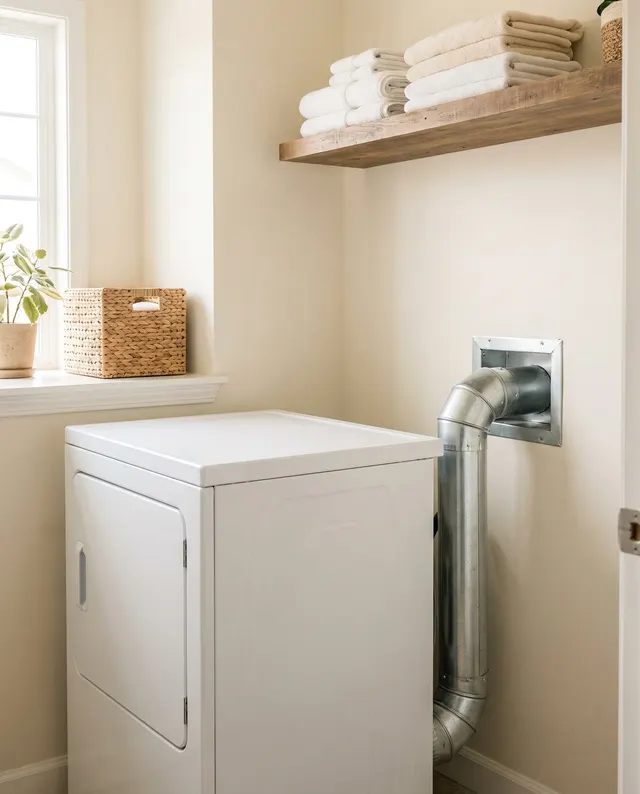
What's included with dryer vent cleaning
Here is what a dryer vent cleaning covers in a typical 30 to 60 minute visit.
Inspect + baseline airflow
We follow the whole vent path, from the transition hose behind the dryer through the wall duct to the outside termination. An airflow reading at the termination gives us a before number to check the cleaning against.
Rotary brush the full run
A spinning brush head on flexible rods scrubs the duct wall while a vacuum pulls the loose lint out. It clears the mats a leaf blower or shop vac cannot reach, which matters on the long runs in two-story South Houston homes.
Clear the termination
Outside flaps and guards collect lint, and around here they collect bird nests too. We clear the termination and make sure the flap opens with the dryer running. If the hood is damaged or screened over, we tell you it needs replacing. Roof terminations, common on two-story Texas builds, are part of the standard service.
Check the transition hose
The short hose behind the dryer fails more than any other piece. It gets crushed against the wall or kinked, and some are foil or plastic that should never be on a dryer. We re-seat it and flag it if it should be replaced with semi-rigid metal duct.
Verify airflow + written notes
A second airflow reading at the termination confirms the line is clear. It is the same before-and-after measuring we do on ductwork. You get written notes on what came out and anything to schedule later.
Signs your dryer vent is restricted
A lint-blocked vent gives little warning before the thermal fuse blows, or something worse happens. Watch for these earlier signs.
- Clothes need a second cycle to dry
- Dryer top is hot to the touch mid-cycle
- Burning or hot-lint smell while the dryer runs
- Exterior vent flap barely opens when the dryer is on
- Visible lint collecting at the outside termination
- Laundry room turns humid during a cycle
- Dryer shuts off mid-cycle on thermal protection
- Lint dust settling around the laundry room
- Birds active around the vent hood
- You bought the home and don't know the vent's service history
How a visit works
Five steps. No surprises. Same on your first call as your fiftieth.
-
Book the visit
Book it as its own 30 to 60 minute appointment, or add it at a discount to a duct cleaning or tune-up we are already doing at your house.
-
Inspect + baseline
We inspect the path from the transition hose to the termination and take a before airflow reading.
-
Rotary clean
Rotating brush plus vacuum extraction through the full run, roof terminations included.
-
Termination + hose
The outside hood gets cleared and the flap checked. Then the transition hose is re-seated, and anything worn out gets flagged.
-
Verify + notes
An after airflow reading confirms the line is clear, and you get written notes on what we found.
- $99 Diagnostic visit ($79 for new customers), waived when you approve the repair
- Free In-home estimates on new systems
- Same price Nights, weekends, and holidays. No overtime fees.
Frequently asked
How much does dryer vent cleaning cost?
It is flat-rate and in writing before we start, and it costs less as an add-on to a duct cleaning or tune-up. Clear Advantage members get 10% off. The price depends on run length and whether the vent ends at a wall or on the roof, so we confirm it with you first.
How often should a dryer vent be cleaned?
Once a year for most homes. Clean it more often if you run loads every day, have a long run or a roof termination, or have pets shedding into the laundry. A vent that has never been cleaned usually gives up a startling amount of lint the first time.
Does a clogged dryer vent really cause fires?
Yes. Lint is fuel sitting in a duct full of hot air, and a restricted vent lets that heat build. NFPA lists failure to clean as the leading factor in dryer fires. Cleaning once a year takes the fuel out.
Can I clean my dryer vent myself?
A short, straight wall vent, a few feet from dryer to exterior, can often be done with a brush kit and a vacuum. Runs with elbows or a roof termination need rotary equipment and a ladder. If your dry times do not improve after a DIY cleaning, the clog is deeper than the kit reached.
My dryer vents through the roof. Can you clean it?
Yes. Two-story slab homes in Pearland and Friendswood often vent through the roof, and so do plenty in League City. Those clog faster, because the long vertical run gives lint more wall to cling to and the cap collects debris and nests. Cleaning the run and the cap is part of the standard service.
Will cleaning the vent make my dryer dry faster?
If the vent was restricted, yes, noticeably. Most loads go back to one cycle. The laundry room stays cooler, and the heating element runs less, which you will see on the electric bill.
Can you do it during a duct cleaning or tune-up visit?
Yes, and it is the cheapest way to get it done. The truck and tech are already at your house, so the add-on price is lower than a standalone visit. Mention it when you book and we will add it to the same appointment.